
The Final Step That Covers Gaps and Gives Your Walls a Clean, Finished Look
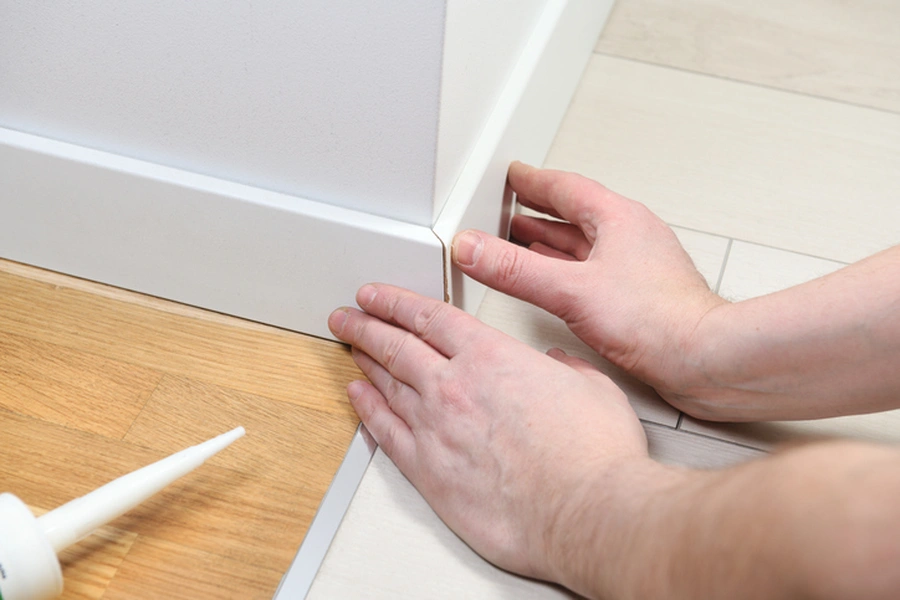
Baseboard installation is the step that turns freshly finished drywall into a complete, polished room. After drywall is hung, taped, and painted, there is still a small gap where the wall meets the floor. Baseboards cover that gap, protect the bottom of the wall, and give the space a clean edge. Without trim, the room can look unfinished even if the drywall work is done well.
What You Need Before Starting
Before you install baseboards, make sure the drywall project is fully complete. The walls should be sanded, primed, and painted. Floors should also be installed or at least planned so you know the final height.
Here is what you will need for most baseboard installation jobs:
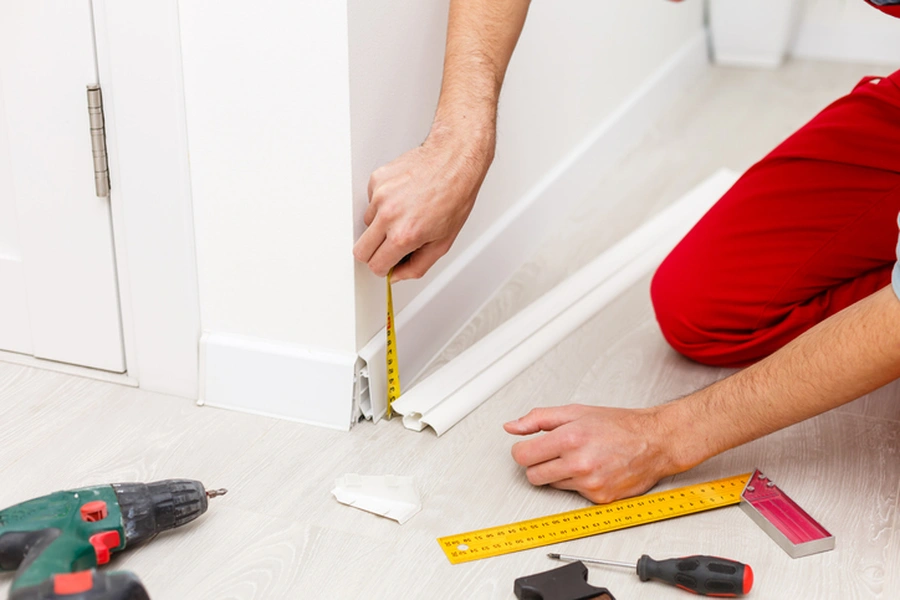
- Baseboard trim boards
- Measuring tape
- Miter saw
- Nail gun or hammer and finish nails
- Construction adhesive (optional)
- Caulk and caulk gun
- Wood filler
- Paint or stain
You should also check that the bottom edge of the drywall is solid. If the drywall was cut too short or has damage near the floor, that may need quick repair before trim goes up.
Step-by-Step Process
Baseboard installation follows a clear order. Taking your time with each step helps the final result look neat and tight.
- Measure each wall from corner to corner.
- Cut the baseboard to length using a miter saw for angled corners.
- Test fit each piece before nailing it in place.
- Apply adhesive if needed, then nail into wall studs.
- Fill nail holes with wood filler.
- Caulk along the top edge where trim meets drywall.
- Touch up with paint or stain.
Inside corners are usually cut at 45-degree angles. Outside corners also need clean miter cuts so the edges meet tight. After nailing the boards in place, caulk hides small gaps between the trim and wall. This step makes a big difference in how smooth the job looks.
Common Mistakes to Avoid
Even simple trim work can go wrong if you rush. Here are common problems people run into:
- Not checking that walls are straight before cutting
- Forgetting to locate wall studs for nailing
- Cutting boards too short
- Skipping caulk and paint touch-ups
- Installing before flooring is complete
Another issue is uneven drywall. If the wall bows out, the baseboard may not sit flat. In that case, small shims or extra caulk can help. If the gap is large, the drywall may need repair first.
When to Call a Professional
Some rooms are simple squares. Others have many corners, curves, or uneven surfaces. Tall baseboards or custom trim designs also require careful cuts and tight joints.
You may want professional help if:
- Your walls are uneven or damaged
- You have detailed or decorative trim
- You want perfectly tight corner joints
- The project includes repairs beyond basic drywall work
A skilled installer can handle tricky cuts and make small adjustments so everything lines up. Clean trim lines help the paint job stand out. It also adds value and gives the room a finished feel.
Why Baseboards Matter for the Whole Room
Baseboards do more than cover gaps. They protect drywall from kicks, vacuum bumps, and furniture scrapes. Over time, walls near the floor take a lot of abuse. Trim acts as a shield.
They also tie the space together. Once baseboard installation is done, the wall color looks sharper and the flooring looks framed. The eye sees a clear boundary between surfaces. That clean line is what makes the drywall project feel complete.
Whether you choose simple flat boards or detailed molding, the trim style should match the home. Taller ceilings often look better with taller baseboards. Smaller rooms may look best with simple, clean lines.
Ready to Finish Your Project the Right Way
If you are wrapping up a drywall project in Colton, CA, I would be glad to help with the final trim work. At JC Drywall, I focus on clean lines and tight joints so the whole room looks complete. Call me at (909) 645-2368 to talk about your baseboard installation and how I can help finish your space the right way.